Crawl Space Encapsulation Cost Guide 2026
Crawl Space encapsulation is one of the most impactful home improvements you can make for structural protection, indoor air quality, and energy efficiency. But costs vary widely depending on your crawl space size, where you live, and how much work your crawl space needs. This guide breaks down typical pricing by square footage, region, and service scope so you can budget accurately and avoid overpaying. All figures are CrawlSpaceFinder's own 2026 estimates, not published prices or quotes. Your actual quotes will vary by contractor, region, and the condition of your crawl space.
Cost at a glance
Full crawl space encapsulation across typical crawl space sizes, 2026 estimates.
- Low
- $4,000
- Small, dry, easy access
- Typical
- $7,500
- Most homes land here
- High
- $15,000
- Large space, heavy prep and repairs
CrawlSpaceFinder's own estimates: not published prices, not quotes, and not sourced from the contractors listed on this site.
What Encapsulation Actually Looks Like
Most homeowners have never seen a finished encapsulation system up close. Here is what each component looks like once installed — illustrations, not photos of a specific job.
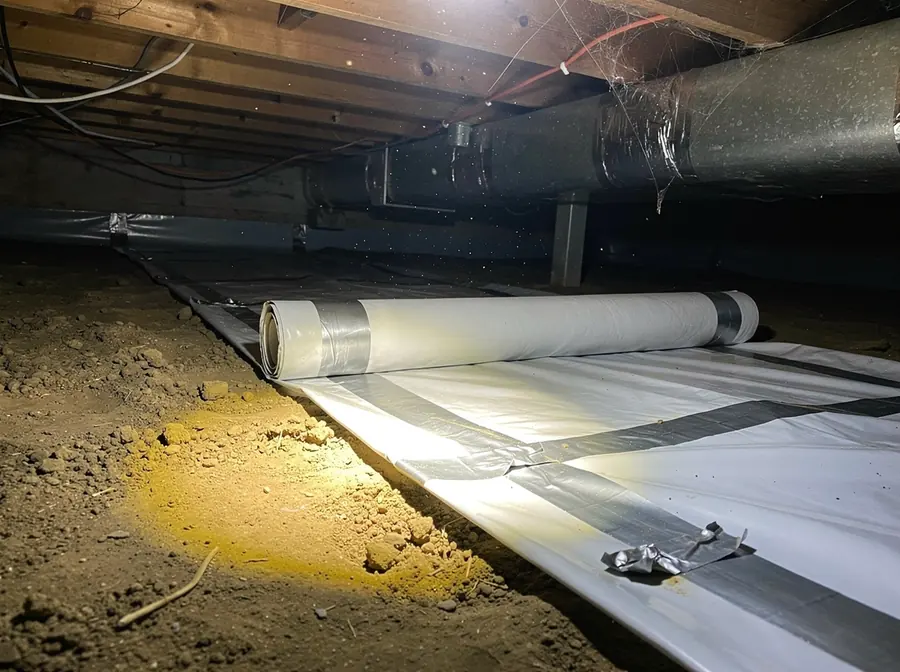
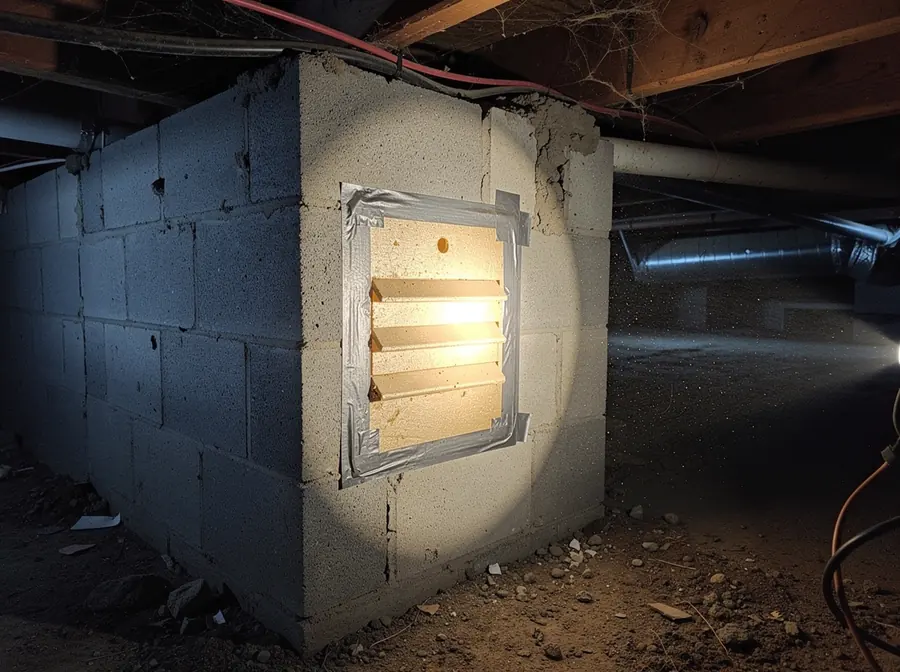
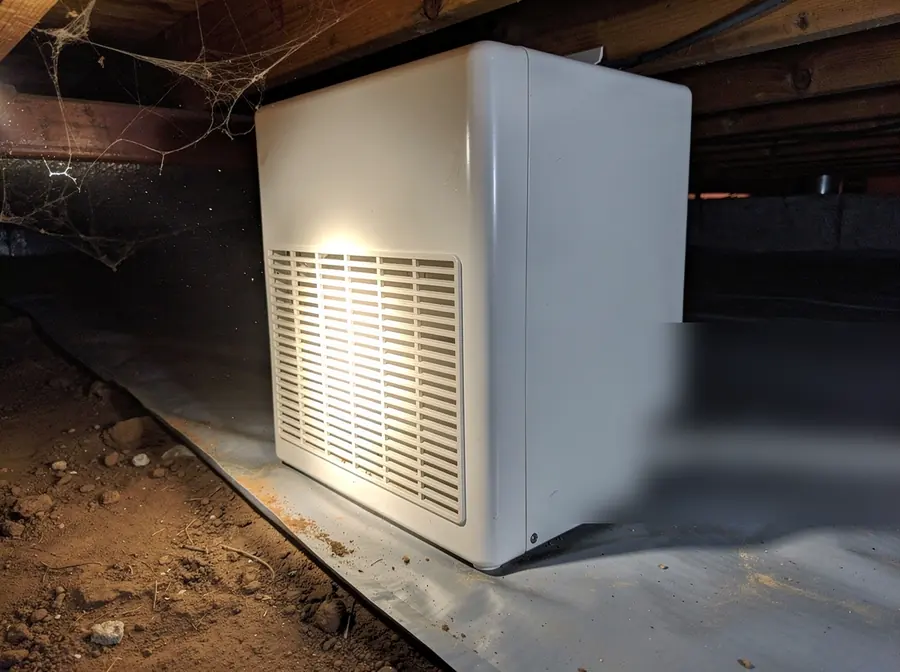
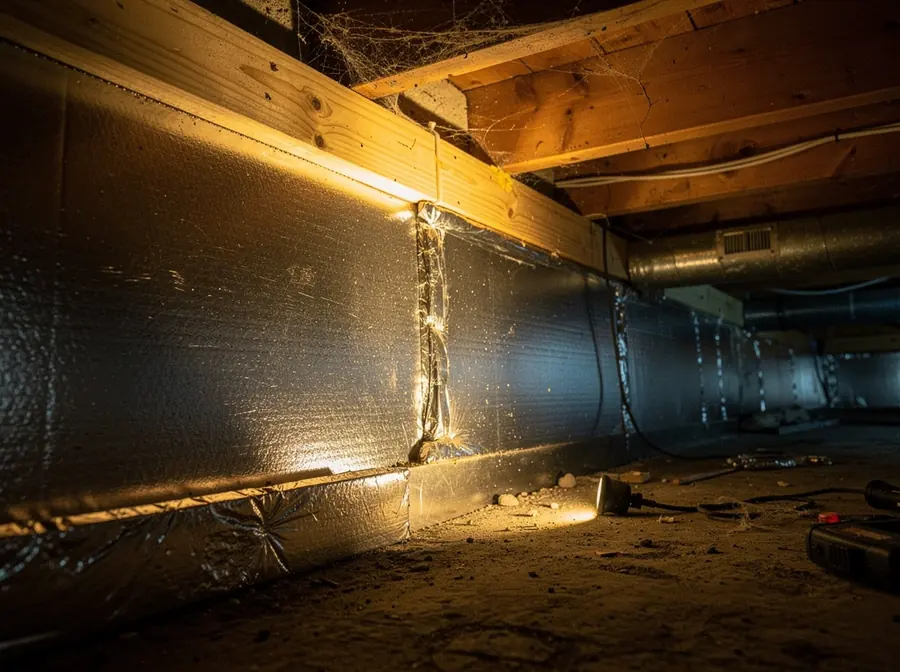
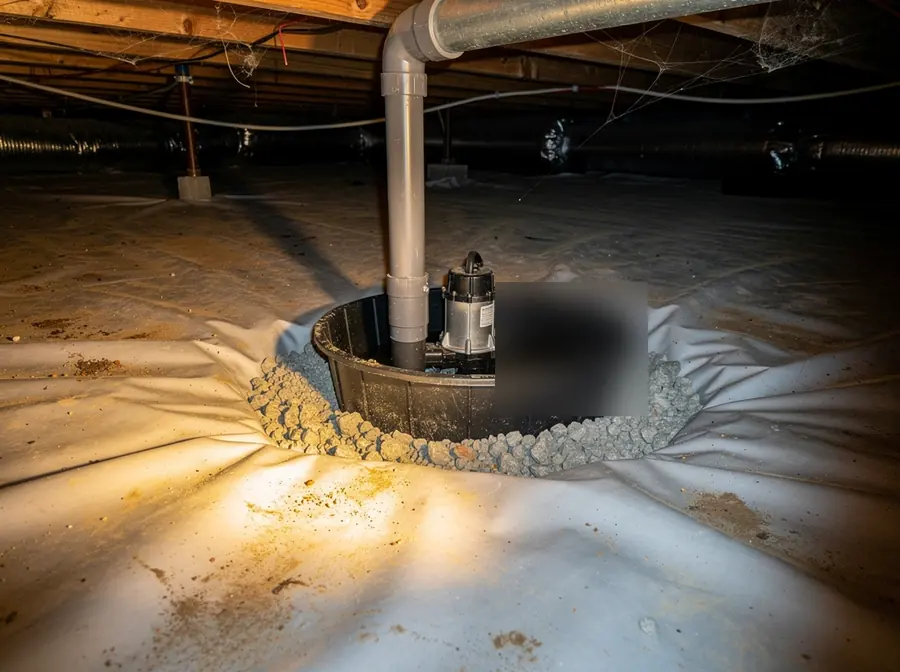
Illustrations — not photos of an actual job or contractor's work
| Service | Low | Average | High |
|---|---|---|---|
| Vapor barrier only | $1,200 | $2,200 | $4,000 |
| Full encapsulation | $4,000 | $7,500 | $15,000 |
| Interior drainage | $2,500 | $5,000 | $9,000 |
| Sump pump install | $800 | $1,500 | $3,000 |
| Dehumidifier install | $1,000 | $2,000 | $3,000 |
| Mold remediation | $1,500 | $3,500 | $6,000 |
| Foundation crack repair | $500 | $2,500 | $10,000 |
Cost Per Square Foot Breakdown
Square footage is the single biggest driver of encapsulation cost. Larger crawl spaces require more materials (vapor barrier, tape, fasteners, insulation) and more labor hours, but the per-square-foot cost actually decreases at scale because mobilization, setup, and equipment costs are fixed. Here is what to expect at common crawl space sizes.
| Crawl Space Size | Vapor Barrier Only | Full Encapsulation | Encaps. + Drainage + Dehumidifier |
|---|---|---|---|
| 500 sq ft | $1,000–$2,000 | $4,000–$5,500 | $5,500–$9,000 |
| 1,000 sq ft | $1,500–$3,500 | $4,500–$8,500 | $7,500–$13,000 |
| 1,500 sq ft | $2,000–$4,000 | $6,000–$11,000 | $9,500–$17,000 |
| 2,000+ sq ft | $2,500–$4,000 | $7,500–$15,000 | $12,000–$22,000+ |
On a per-square-foot basis, the table above works out to roughly $1.25–$4 per sq ft for a vapor barrier, $3.75–$11 per sq ft for full encapsulation (barrier + wall insulation + sealing + dehumidifier), and $6–$18 per sq ft with drainage added, the rate falling as the crawl space gets larger. These per-sq-ft figures include both materials and labor.
Regional Cost Variations
Where you live significantly affects what you will pay for encapsulation. Labor rates, humidity levels, soil conditions, and local building codes all vary by region, and they all affect the final price. Here is a region-by-region breakdown.
Southeast (AL, GA, MS, SC, NC, TN, FL)
Full encapsulation: $4,000–$15,000
The Southeast is the highest-demand market for crawl space work. Hot, humid summers push relative humidity in unsealed crawl spaces above 80%, creating ideal conditions for mold, wood rot, and termites. Despite high demand, labor costs are moderate compared to coastal metros, which keeps overall pricing competitive. However, the scope of work tends to be larger because moisture problems are often more advanced by the time homeowners act. Many Southeast projects require mold remediation as an add-on, which can push total costs $2,000–$5,000 higher. Browse Southeast contractors on CrawlSpaceFinder.
Pacific Northwest (WA, OR)
Full encapsulation: $5,000–$15,000
The Pacific Northwest combines year-round rain with higher labor rates, making it one of the more expensive regions for encapsulation. Persistent moisture from seasonal rainfall means drainage systems are almost always part of the project, not an optional add-on. Soil conditions vary—clay-heavy soils in parts of Oregon and Washington retain water and create hydrostatic pressure against foundations, often requiring exterior drainage or French drain systems that add $2,500–$9,000. In BLS data for May 2025, construction and extraction occupations averaged $39.44 an hour in the Portland metro and $42.11 in the Seattle metro, against $31.42 nationally. Find contractors in Washington or Oregon.
Midwest (OH, IN, IL, MI, MO, WI, MN, IA)
Full encapsulation: $4,500–$15,000
In BLS data for May 2025, construction laborers in most large Midwest metros earned above the national mean hourly wage of $25.02, including Minneapolis ($32.59), St. Louis ($32.06) and Columbus ($30.01). Humidity is seasonal—summer months bring high moisture levels, but winters are dry. This means dehumidifier sizing can sometimes be smaller than in year-round humid climates, saving $200–$500 on equipment. The main cost driver in the Midwest is foundation condition: freeze-thaw cycles cause more foundation cracking than in warmer regions, and crack injection adds $300–$800 per crack.
Northeast (NY, NJ, PA, CT, MA, ME, VT, NH)
Full encapsulation: $5,000–$15,000
The Northeast has some of the highest construction labor rates in the country: in BLS data for May 2025, Massachusetts and New Jersey had the second- and third-highest mean hourly wage for construction laborers, behind Hawaii. Building codes tend to be stricter, and permit fees add $75–$500 to project costs. Many older homes (pre-1960) in the Northeast have stone or rubble foundations rather than poured concrete, which makes sealing more complex and labor-intensive—expect a 20–40% premium on encapsulation for stone-foundation crawl spaces. Radon mitigation is also commonly bundled with encapsulation in the Northeast, adding $800–$1,500. Browse contractors in New York, New Jersey, or Pennsylvania.
Southwest (AZ, NM, TX, NV, UT, CO)
Full encapsulation: $4,500–$14,000
Crawl spaces are less common in the arid Southwest—many homes are built on slabs. Where crawl spaces exist, the dry climate means moisture problems are less severe, and the scope of work is often smaller. Encapsulation in the Southwest is typically motivated by pest control (scorpions, rodents) and energy efficiency rather than moisture damage. Fewer contractors specialize in crawl space work in this region, which can mean longer wait times but does not necessarily mean higher prices—the reduced scope offsets the thinner market. See contractors in Texas, the only Southwest state currently in the directory.
What Affects Your Crawl Space Encapsulation Cost
No two crawl spaces are the same, which is why quotes from different contractors can vary by thousands of dollars even for the same home. Understanding the factors that drive cost helps you evaluate quotes and identify when a contractor is padding a bid or cutting corners. Here are the six primary factors.
Crawl Space Size
The square footage of your crawl space is the baseline for every estimate. A 500 sq ft crawl space uses roughly half the materials of a 1,000 sq ft space, but labor does not scale linearly—setup, equipment transport, and inspection time are fixed costs regardless of size. This is why the per-square-foot cost decreases for larger spaces.
Accessibility
Crawl Spaces with low clearance (under 24 inches), limited access points, or obstacles like HVAC ductwork and plumbing runs take significantly longer to work in. Contractors often charge a 15–30% premium for low-clearance crawl spaces because the work is physically demanding and slower. If your crawl space requires creating a new access point, add $300–$1,000.
Moisture Severity
A crawl space with mild humidity needs different treatment than one with standing water. If water is actively entering the crawl space, drainage must be addressed before encapsulation—you cannot simply seal over an active water problem. Standing water situations typically require an interior French drain system with a sump pump ($2,500–$9,000) before the encapsulation work begins.
Existing Damage
Mold, wood rot, pest damage, and deteriorated insulation must be addressed before encapsulation. Mold remediation adds $1,500–$6,000 depending on severity and affected area. Damaged floor joists or support beams require structural repair at $1,000–$5,000+ per beam. A contractor who quotes encapsulation without inspecting for damage may be setting you up for a costly change order. Review our homeowner inspection checklist before getting quotes.
Scope of Work
There is a significant price difference between a vapor barrier install and a complete encapsulation system. A vapor barrier alone covers the floor and sometimes the walls, while full encapsulation includes wall insulation, sealed vents, a conditioned air supply or dehumidifier, and possibly drainage. The more comprehensive the system, the higher the upfront cost—but also the greater the long-term protection and energy savings. See our services breakdown for a detailed comparison.
Permit Requirements
Local building codes determine whether you need permits and inspections, which add both cost and time. Permit fees range from $75–$500 depending on jurisdiction and scope. Some municipalities require inspections at multiple stages, which may require the contractor to schedule around inspector availability. Always verify whether your contractor includes permit costs in their bid or treats them as an additional charge.
Service Scope Comparison: What Are You Actually Getting?
Contractors use terms like "vapor barrier," "encapsulation," and "waterproofing" loosely, and what one company calls "full encapsulation" may be another company's "partial." Understanding exactly what each service level includes helps you compare quotes accurately. For a full breakdown of each service type, visit our crawl space services guide.
Vapor Barrier Only
$1,200–$4,000A 6-mil to 20-mil polyethylene sheet laid across the crawl space floor and sometimes extended partway up the walls. The barrier is secured with stakes or adhesive and seams are taped. This is the minimum moisture-control measure and reduces ground moisture evaporation. It does not address wall moisture, air leakage, or humidity control. Best for dry climates or crawl spaces with minimal moisture issues.
Includes: vapor barrier, seam tape, fasteners, labor. Does not include: wall coverage, vent sealing, insulation, dehumidifier.
Partial Encapsulation
$3,000–$7,000A step up from a basic vapor barrier. Partial encapsulation covers the floor and extends a heavier-gauge barrier (12–20 mil) up the foundation walls, sealed at the top. Crawl Space vents are typically closed but not permanently sealed. This approach handles most ground and wall moisture but does not fully condition the crawl space air. It is a reasonable middle ground for homes in moderately humid climates where full encapsulation is not cost-justified.
Includes: heavy-gauge floor + wall barrier, seam tape, vent covers, labor. Does not include: rigid insulation, dehumidifier, drainage, permanent vent sealing.
Full Encapsulation
$4,000–$15,000The complete package: 20-mil (or thicker) vapor barrier on floors and walls, all seams sealed, crawl space vents permanently sealed, rigid foam insulation on walls, and a commercial-grade dehumidifier to actively control humidity. Some systems also include a conditioned air supply from the home's HVAC system instead of a standalone dehumidifier. Full encapsulation creates a conditioned, semi-livable space that dramatically reduces moisture, improves indoor air quality, and lowers energy costs. This is the standard recommendation for homes in humid climates.
Includes: 20-mil floor + wall barrier, sealed seams, permanent vent sealing, rigid wall insulation, dehumidifier or conditioned air supply, labor.
Full Encapsulation + Drainage + Dehumidifier
$5,500–$22,000+For crawl spaces with active water intrusion, full encapsulation must be paired with a drainage system. This typically includes an interior French drain routed to a sump pit, a sump pump (often with battery backup), full encapsulation as described above, and a commercial dehumidifier. This is the most expensive option but is necessary when water is actively entering the crawl space—encapsulating without addressing drainage first will trap water under the barrier and create worse problems than you started with.
Includes: everything in full encapsulation, plus French drain, sump pit, sump pump (with backup), drainage gravel, labor.
DIY vs. Professional Encapsulation
A basic vapor barrier is one of the few crawl space projects that a capable homeowner can tackle. Full encapsulation, drainage work, and anything involving structural or electrical components should be left to a licensed contractor. Here is where the line falls.
What You Can Do Yourself
- -Install a basic 6-mil vapor barrier on the crawl space floor (materials: $0.30–$0.35 per sq ft)
- -Seal small gaps around pipes and utility penetrations with spray foam
- -Install vent covers (magnetic or manual) to reduce seasonal air infiltration
- -Set up a portable dehumidifier as a temporary moisture control measure
- -Perform visual inspections for standing water, mold, pest damage, and insulation condition
DIY vapor barrier materials cost about $300–$350 for a 1,000 sq ft crawl space. Against a professional install at $1,500–$3,500, that saves roughly $1,150–$3,200.
What Requires a Professional
- -Full encapsulation with wall insulation and permanent vent sealing
- -French drain installation and sump pump wiring (ask your local building department whether it needs a permit or a licensed plumber or electrician)
- -Mold remediation where mold covers more than about 10 square feet or there has been a lot of water damage (EPA guidance); some states, such as New York, license mold remediation contractors
- -Structural repairs to joists, beams, or piers
- -Foundation crack injection or exterior waterproofing
- -Any work that requires a building permit or inspection (the model code lets the owner or the owner's authorized agent obtain the permit; check with your local building department)
Professional encapsulation includes a warranty (typically 10–25 years), which is void if the homeowner modifies the system. Liability for moisture damage also shifts to the contractor.
A note on warranties and liability: Professional encapsulation carries a transferable warranty that protects you (and future buyers) if the system fails. DIY work voids most manufacturer warranties on materials and leaves you personally liable for any resulting damage to the home. If you are planning to sell within the next 5–10 years, professional installation with a warranty is almost always the better investment because home inspectors flag DIY crawl space work, and buyers negotiate accordingly. Find a qualified contractor in your area to get a professional assessment.
Frequently Asked Questions
How much does crawl space encapsulation cost in 2026?
Crawl Space encapsulation typically costs $1,500–$15,000 in 2026, depending on square footage and the scope of work. A basic vapor barrier install in a 1,000 sq ft crawl space runs $1,500–$3,500. Full encapsulation with drainage, insulation, and a dehumidifier runs $5,500–$22,000+. These are our own estimates, not quotes.
What does crawl space waterproofing cost?
Crawl Space waterproofing costs $3,000–$10,000 on average. Interior drainage systems (French drains + sump pump) run $2,500–$9,000. Exterior waterproofing is more expensive: $7,000–$15,000+.
How much does a crawl space vapor barrier cost?
A basic vapor barrier installation typically costs $1,200–$4,000, about $2,000–$4,000 for a typical 1,500 sq ft crawl space. Materials alone run $0.15–$0.50 per sq ft, depending on thickness.
Is crawl space encapsulation worth it?
Yes for most homeowners in humid climates. In a DOE-funded field study of 12 homes in North Carolina, closed crawl spaces kept average daily relative humidity below 60% while wall-vented ones had extended periods above 80%, and the closed-crawl-space homes used 15–18% less energy for space heating and cooling. Encapsulation also protects structural lumber from moisture damage. ROI is strongest in humid climates (Southeast, Pacific NW, Mid-Atlantic).
Does homeowners insurance cover crawl space encapsulation?
Standard homeowners insurance covers sudden and accidental damage from covered perils; most home policies don't cover water damage from gradual leaks or seepage, or wear and tear. However, if your crawl space has water damage from a covered peril—such as a burst pipe—the remediation portion may be covered. Flood damage requires a separate flood insurance policy. Check with your carrier for specifics.
Can I finance crawl space encapsulation?
Yes. Many contractors offer financing through third-party lenders; terms and rates vary by lender, so compare them. Home equity loans and HELOCs are another option with lower rates, usually 6–10%. Some utility companies offer rebates for crawl space wall insulation, which can be part of an encapsulation project. The FHA Title I property improvement loan program also covers single family home improvements up to $25,000; any loan over $7,500 must be secured by a recorded lien on the improved property.
What is the ROI on crawl space encapsulation?
In a DOE-funded field study of 12 homes in North Carolina, closed crawl spaces saved roughly 870–1,025 kWh (about $87–$103) per household per year on space heating and cooling. Other returns, such as reduced pest treatment and avoided structural repairs, are harder to price. At resale, encapsulated crawl spaces are a positive differentiator—appraisers and inspectors flag moisture problems, so a clean, sealed crawl space removes a common deal-breaker. There is no standardized ROI figure.
How long does crawl space encapsulation last?
A properly installed encapsulation system lasts 15–25 years before major components need replacement. The vapor barrier itself (20-mil polyethylene) can last 20+ years if undisturbed. Dehumidifiers typically need replacement every 8–12 years. Sump pumps last 7–10 years on average. Annual inspections help catch small issues—like torn barrier sections or clogged drains—before they become expensive repairs.
Do I need a permit for crawl space encapsulation?
Permit requirements vary by municipality. If the project involves new electrical wiring or circuits (plugging approved portable equipment into an existing permanently installed receptacle is exempt under the model code), plumbing (drainage systems), or structural modifications, a permit is typically required. Your contractor should pull all required permits—if they suggest skipping permits, that is a red flag.
What are the signs I need crawl space encapsulation?
The most common indicators include: musty odors on the first floor, visible mold or mildew on floor joists, standing water or consistently damp soil in the crawl space, sagging or soft floors above the crawl space, increased allergy symptoms indoors, high indoor humidity (above 60% relative humidity), pest infestations (termites, rodents, and insects thrive in moist crawl spaces), and peeling paint or wallpaper on first-floor walls. If you notice two or more of these signs, a professional inspection is warranted.
Get quotes for your own crawl space
These are national estimates. Enter your ZIP code, city, or state to see contractors listed near you and request an estimate.
Before you call, take the hiring checklist with you — it covers licensing, insurance, and what a written estimate should contain.